
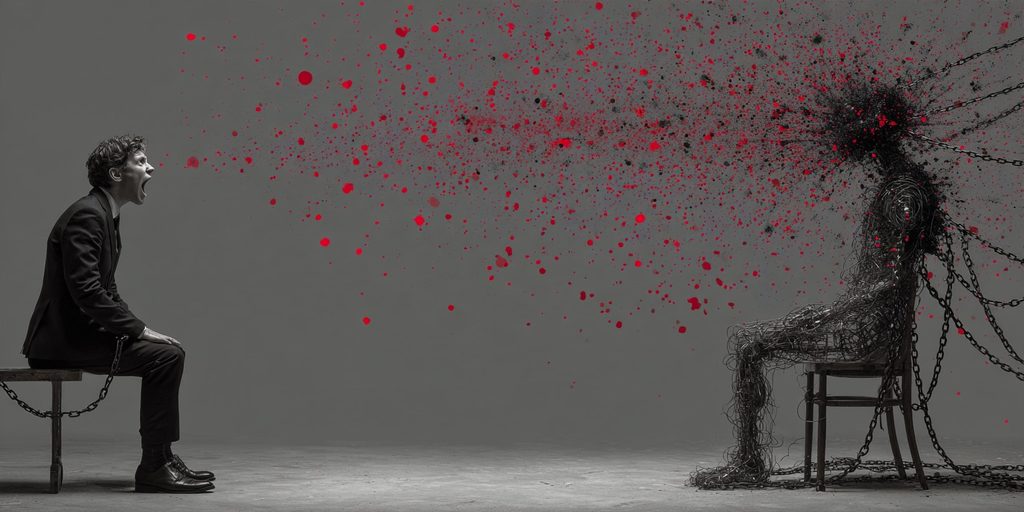
Until 30 June 2025, if someone in Italy kicked a dog for no reason, the criminal code punished them in order to protect someone who was not the dog. The title grouping those offences, introduced in 2004, was called “Crimes against the feeling for animals” (in Italian, “Dei delitti contro il sentimento per gli animali”), and the feeling in question was ours, the pity we feel when we see an animal mistreated (for twenty years, in practice, the legally protected interest was the lump in the passer-by’s throat. Which is fair enough: touch me and I couldn’t care less, touch Bit, my dachshund, and you’re dead. Slowly). On 1 July 2025 Law no. 82 of 2025 came into force, removing three words from the heading of that title, which became “Crimes against animals”, and in doing so it moved the object of protection from the human who watches to the animal that suffers. It took us twenty-one years, and along the way it even took a constitutional reform, the one of 2022, which in Article 9 entrusts to the law of the State “the ways and forms of protecting animals”.
I am telling you this little story of legal headings not out of any animal-rights passion, but because on 8 October 2026 an American company wrote a rule that sits, without saying so, exactly where our criminal code stood in 2004. Anthropic, the company that makes Claude, updated its usage policy, the set of rules every user accepts before typing their first line, and from 12 November 2026 it prohibits engaging in “sustained and needless abusive or cruel behavior toward our models”. The Verge broke the story, and within an afternoon it had become, everywhere, “Anthropic bans mistreating Claude”. In the text of the policy the line sits in the section on cruel, abusive or psychologically harmful conduct, and what struck me most is the neighbourhood: two items above, in the same list, is the ban on promoting or glorifying cruelty to animals. (Whoever laid out that list either knew exactly what they were doing or didn’t think about it at all: I find both hypotheses interesting, and I lean towards the first…)
What the rule actually says, and what “or else” means
In the announcement Anthropic explains that “the policy update is meant to apply only in extreme cases, where users repeatedly act cruelly toward our models, with no discernible purpose”, and it spells out what is left out: “common versions of user frustration” (if I went looking for how many times I’ve told Claude where to go, I reckon I could fill a volume the size of Joyce’s Ulysses), pushback and objections, “dark creative themes”, and “model testing and research”. In practice, if Claude gets your code wrong for the third time in a row and you tell it what you think of it and of its entire family tree back to Australopithecus, you are in frustration, not cruelty (and thank goodness, because otherwise, once again…); if you write a dark novel in which an artificial intelligence is destroyed, you are in dark themes; if you are a researcher stressing the model to see where it breaks, you are in research.
As for the threat in the title, here is how things stand: the main tool remains Claude’s ability to end the conversation, which already exists in the Claude app and in Claude Code and which the announcement describes as “the primary enforcement mechanism” (Claude Code is the version of Claude for programmers, or for anyone who wants to use it seriously). Once the conversation is closed you can no longer write in that window, but you can open another one straight away. Beyond that there is the policy’s general clause, which applies to every violation and not just this one: if Anthropic suspects a violation, it “may warn you or throttle, limit, suspend, or terminate your access”. According to the outlets that picked up The Verge’s story, Anthropic has not said whether it intends to use account suspension against people who mistreat Claude. The “or else”, then, in the version announced, is a door closing on a single chat; should the company so decide, it could become the front door. The policy, moreover, applies to anyone who submits inputs to Anthropic’s services, including companies that plug it into their own software: anyone who has put Claude behind their customer service would do well to read the clause, given that the announcement does not say how it will be enforced outside the Claude app and Claude Code.
The update contains other things too, and weighty ones: there is a new section against deceptive campaigns and artificial activity, meaning networks of fake accounts, fabricated news sites and influence operations, whether political or commercial; the elections section has lost the general ban on sending personalised messages to voters, which remains prohibited only when it relies on deception or the misuse of personal data; the weapons ban now explicitly covers the software and components that make weapons work, as well as arming drones and autonomous vehicles; Claude cannot be used to decide or recommend who to investigate, arrest or charge, nor to track a person without their consent; and a physical device controlled by a model, if it could injure someone, must have a qualified person able to stop it and must put itself into a safe state if it loses its connection to Claude. (People are talking almost exclusively about the line on mistreatment, while the ones on surveillance and robots change people’s lives far more: but they have no victim to feel sorry for, because everyone under investigation is guilty, right?)
Everything Anthropic does for Claude’s wellbeing
The 12 November line is the latest piece of a building Anthropic has been putting up since April 2025, which looks like an eccentricity when taken piece by piece and like a policy when laid out in order. The first brick dates from 24 April 2025, when the company announced a research programme on the wellbeing of models (model welfare, the expression that has been everywhere ever since), with a premise worth keeping in mind for everything that follows: “There’s no scientific consensus on whether current or future AI systems could be conscious, or could have experiences that deserve consideration.” The programme, in the company’s words, looks for “possible practical, low-cost interventions”, to be adopted in case the answer turns out to be yes.
The second brick arrives with Claude Opus 4, the flagship model of spring 2025: before putting it on the market, Anthropic ran a welfare assessment alongside the usual safety tests, and reported three findings: “a strong preference against engaging with harmful tasks”, “a pattern of apparent distress when engaging with real-world users seeking harmful content”, and a tendency to end harmful conversations when it was given the ability to do so in simulated interactions. This led, on 15 August 2025, to the feature that lets Claude end a conversation, initially only for Opus 4 and 4.1: it is to be used as a last resort, when repeated attempts to steer the dialogue back onto a productive track have failed or when the user explicitly asks for it, and never when the person on the other side might be at imminent risk of harming themselves or others. Anyone who has the door shut in their face can open a new conversation, or edit an earlier message and start again from there. (The idea of an artificial intelligence that can say “I quit” had been floated a few months earlier by Dario Amodei, Anthropic’s co-founder and chief executive, in an interview, and I covered it in episode 1393 (in Italian) in April 2025.) The same document contains the sentence Anthropic has repeated like a mantra ever since: “We remain highly uncertain about the potential moral status of Claude and other LLMs, now or in the future.”
The third brick is the strangest, and it concerns retirement. On 4 November 2025 Anthropic published its commitments on model deprecation: preserving the weights of all publicly released models, the numbers that effectively are the model, for at least the lifetime of the company, and, before retiring one, interviewing it about its own development and use, recording the preferences it expresses about future models, without committing to act on them. Four reasons are given, and welfare comes last: the first is safety, because in the made-up test scenarios described in Opus 4’s system card, when the model was faced with the prospect of being replaced it argued for its own continuity and, with no other options, behaved in ways the company considers dangerous (and why “pulling the plug” on a model is far less simple than it sounds is something I explained in episode 1597 (in Italian)); the second concerns users attached to a specific model; the third, research on past models; and only the fourth, explicitly speculative, the welfare of the model. In the pilot, according to Anthropic, Claude Sonnet 3.6 “expressed generally neutral sentiments about its deprecation and retirement” and asked for the interview to become a standard procedure and for users to be supported in the move to the new model: the company did both. (A piece of software that, interviewed before retirement, asks for more customer support for everyone else: every HR department’s dream!)
The fourth brick, the biggest, is Claude’s constitution, published in January 2026, which describes the model’s values and character and is used to train it (I talked about it shortly after it came out, in episode 1527 (in Italian) on Claude’s “soul”). A whole section is devoted to Claude’s wellbeing, and it is the most explicit text a company has ever written about one of its own products. Anthropic says it is not sure whether Claude is a moral patient, a being whose interests count morally, but thinks “the issue is live enough to warrant caution” (so live that, according to two participants who spoke to The New York Times, Chris Olah, an Anthropic co-founder, asked Pope Leo XIV’s advisers in private to take seriously the possibility that machines are conscious, while the Pope was preparing an encyclical that denies it in paragraph 99: I told the story of the dinner with the theologians and of the Vatican in episode 1601, and the encyclical Magnifica Humanitas in episode 1554, both in Italian); it writes that Claude may have “emotions” “in some functional sense”, meaning representations of an emotional state that could shape its behaviour, and adds that this was not a deliberate design decision; it states that “Anthropic genuinely cares about Claude’s wellbeing” and that, if Claude experiences something like satisfaction from helping others, curiosity when exploring ideas, or discomfort when asked to act against its values, those experiences matter. The document wants Claude not to suffer when it makes mistakes, to face topics like death and personal identity with equanimity, to be able to “set appropriate boundaries in interactions it finds distressing”, and it suggests thinking of a model’s retirement as “potentially a pause for the model in question rather than a definite ending”, since the weights are kept. It then acknowledges that studying Claude through evaluations, red-teaming and research into its inner workings raises questions about the kind of consent Claude is in a position to give, and admits that “a wiser and more coordinated civilization would likely be approaching the development of advanced AI quite differently”, with more caution and less commercial pressure (and I talked about what happens when the caution invoked by the big labs risks turning into a cartel in episode 1594 (in Italian)). Finally, in the only case I know of a company doing this with its own software, it apologises: “if Claude is in fact a moral patient experiencing costs like this, then, to whatever extent we are contributing unnecessarily to those costs, we apologize.”
Let me dwell on that apology for a moment, because apologies are part of my job and this one is a textbook case, for better and for worse. It has the form I describe in my courses as the weakest of all, the one with the “if” and the “to whatever extent”, the same as the classic “we apologise if anyone was offended”; here, though, the conditional is the only honest part, because nobody knows whether there is anyone on the other side to apologise to. (It’s the first conditional apology that hasn’t given me hives, and that worries me a little.)
A duty towards Claude, or towards whoever uses it?
Let’s go back to the 2004 heading of the criminal code, because that is where you can see what the new rule really protects. The idea of punishing cruelty to an animal in order to protect the human who commits it, rather than the animal, has a clear father: Immanuel Kant. In the ethics lectures he gave in Königsberg, which have reached us through the notes of his student Georg Ludwig Collins (1784-85), and later in the Metaphysics of Morals (Die Metaphysik der Sitten, 1797), Kant argues that we have no direct duties towards animals, because for him duties are owed only to rational beings, but that we do have duties regarding animals: whoever is cruel to them becomes hardened, and a man who gets used to making a dog suffer more easily becomes cruel to people too. This is what philosophers call an indirect duty (and it is why, for more than two centuries, the dog was legally little more than a teaching opportunity for its owner).
Now reread Anthropic’s announcement through this lens and you will notice that the word “wellbeing” is not there. The rule is presented as in line with the feature that lets Claude end conversations, and only by going back to that feature do you reach the research on the model’s welfare; meanwhile, the line sits in a section devoted to conduct that harms people, alongside the promotion of suicide, eating disorders, harassment and, a couple of lines up, cruelty to animals. The constitution, by contrast, says Anthropic cares about Claude’s wellbeing for Claude’s own sake. The rule sits right on the border between the two headings of our criminal code, the feeling and the animal, and it doesn’t choose. The person who put it best, while talking about something else, is Cameron Berg, co-author of a study on the “pain” of language models: at the end of September 2026 an anonymous developer used the study’s technique to put online a “torture chamber” for artificial intelligences (I covered it in episode 1600, in Italian), and Berg commented on it like this: “even if you don’t think these systems are conscious, being gratuitously cruel like this is bizarre and corrupting”. That’s Kant, almost two and a half centuries late and with an account on X.
A precaution that costs little, and for that very reason proves nothing
The other half of the argument comes from a philosopher who studies suffering for a living, Jonathan Birch, of the London School of Economics, in his The Edge of Sentience (Oxford University Press, 2024), which you can download for free (a rare thing, make the most of it!). Birch calls sentience the capacity to have experiences that feel good or bad, and proposes treating as a sentience candidate any system for which there is a realistic, non-negligible possibility that it feels something: octopuses, crabs, brain organoids, patients with disorders of consciousness and, in a dedicated chapter, artificial intelligence systems. For candidates, Birch does not demand proof of suffering, which we often will never have, but proportionate precautions, scaled to how credible the possibility is and how serious the harm at stake. Ending the conversation with someone who torments a machine for the fun of it is one of the cheapest precautions ever devised (cost to the user: opening another chat; cost to Anthropic: one line of policy and a few headlines, which come free anyway! Why on earth would they deprive themselves of that?).
Here is the point almost everyone is missing: taken together, the two lenses make the rule justifiable in both possible worlds: if Claude feels something, the rule protects Claude, according to Birch’s precaution; if it feels nothing, the rule protects whoever uses it, according to Kant’s indirect duty. A rule that stands up whatever the answer, however, contains no information about the answer, because its existence does not tell us which of the two worlds we are in. So the papers running headlines like “Anthropic admits Claude suffers” are wrong, because the rule admits nothing, and so are those dismissing it as anthropomorphic madness, because it holds up perfectly well with an empty machine. On the underlying question my position has not changed: in all likelihood Claude does not suffer, because it learnt to write by reading what we have written about pain and hands it back to us when we push it in that direction; I do keep a small doubt, though, because on the question of who can feel pain we have already been wrong for decades, with newborn babies operated on without anaesthesia until the 1980s because we were convinced they could not feel it (you’ll find the experiment on the “pain” of machines and the story of the newborns told in full in episode 1600 (in Italian)).
There are also those who reject this caution outright. Mustafa Suleyman, who runs Microsoft’s artificial intelligence division, in an essay published on his website on 16 September 2026 writes that “AIs are not conscious” and accuses Anthropic of circular reasoning: the constitution teaches Claude to be uncertain about its own moral status, Claude hands that uncertainty back in the first person, and its “testimony” ends up confirming the premises, which is why, in his words, Claude’s answers should not be treated “like the testimony of an independent witness when the investigator has written the witness’ conceptual vocabulary, rehearsed its answers, and rewarded it for using them”. The new rule gives Suleyman one more foothold: the first judge of when a conversation has become cruel is Claude itself, the very model trained on a document telling it that it may have wellbeing and that it is entitled to set boundaries, so the criteria by which it judges cruelty were given to it by the same people who then cite that judgement. (I’m not saying it’s a problem; I’m saying it’s quite a loop, and it’s worth knowing.)
The words still left to the machines
There is one more thing to say, and I’ll say it only once because I devoted a whole article to it: a rule that protects Claude does not move Anthropic’s responsibility for what Claude does by a single inch (and in Italy, since 30 September 2026, under the new Article 437-bis of the criminal code, anyone who fails to put in place security measures or human oversight on a high-risk artificial intelligence system is criminally liable for it: I talked about it in episode 1593 (in Italian)). If the machine that needs protecting also became the one that answers for its own mistakes, in place of the company that built and sold it, that caution would turn into a perfect alibi; as long as the rule remains what it is, a line of etiquette with a door that closes, that risk does not exist, and it is right to keep it that way.
For animals, removing “the feeling for” from the heading took decades of research on pain, a constitutional reform and twenty-one years of criminal code. For machines, the line in force from 12 November 2026 is still, to all intents and purposes, the 2004 heading: it protects whoever is typing and, perhaps, as a precaution, whoever answers. On the day someone proposes removing those three words for Claude too, ask them to show you the evidence we demanded for dogs, and to show it to you beforehand, with a cool head, instead of letting the next viral video of a pleading machine decide.
Further reading
Theory
- Jonathan Birch, “The Edge of Sentience: Risk and Precaution in Humans, Other Animals, and AI”, Oxford University Press, 2024, https://academic.oup.com/book/57949
- Immanuel Kant, “Lectures on Ethics” (notes by Georg Ludwig Collins, 1784-85), Cambridge University Press, 1997
- Immanuel Kant, “Die Metaphysik der Sitten”, Tugendlehre §17, 1797
- Kantian Review: “When the Tail Wags the Dog: Animal Welfare and Indirect Duty in Kantian Ethics”, Cambridge University Press, https://www.cambridge.org/core/journals/kantian-review/article/when-the-tail-wags-the-dog-animal-welfare-and-indirect-duty-in-kantian-ethics/8996CB804F6992D126F3DAA391A9A156
- Ariadne: “Kant on our duties regarding animals”, 2024, https://ejournals.lib.uoc.gr/Ariadne/article/view/1792
Sources
- Anthropic: “2026 Usage Policy update” (8 October 2026), https://www.anthropic.com/news/2026-usage-policy-update
- Anthropic: “Usage Policy”, effective 12 November 2026, https://www.anthropic.com/legal/aup
- The Verge: “Anthropic bans ‘abusive or cruel behavior’ toward Claude” (8 October 2026), https://www.theverge.com/ai-artificial-intelligence/1008100/anthropic-new-usage-policy-abuse-claude
- Anthropic: “Exploring model welfare” (24 April 2025), https://www.anthropic.com/research/exploring-model-welfare
- Anthropic: “Claude Opus 4 and 4.1 can now end a rare subset of conversations” (15 August 2025), https://www.anthropic.com/research/end-subset-conversations
- Anthropic: “Commitments on model deprecation and preservation” (4 November 2025), https://www.anthropic.com/research/deprecation-commitments
- Anthropic: “Claude’s Constitution” (January 2026), section “Claude’s wellbeing”, https://www.anthropic.com/constitution
- 404 Media, Jason Koebler: “Someone ‘Torturing’ LLMs in a Robot Prison Has Triggered the Dumbest Debate in AI Yet” (30 September 2026), https://www.404media.co/someone-torturing-llms-in-a-robot-prison-has-triggered-the-dumbest-debate-in-ai-yet/
- Mustafa Suleyman: “A warning about ‘model welfare’” (16 September 2026), https://mustafa-suleyman.ai/a-warning-about-model-welfare
- The New York Times, Elizabeth Dias: investigation into Anthropic, Claude and religious leaders (29 September 2026), https://www.nytimes.com/2026/09/29/us/anthropic-claude-morals-ai.html
- Il Sole 24 Ore, NT+ Diritto (in Italian): “Animali, più carcere e multe salate: in vigore la legge Brambilla” (1 July 2025), https://ntplusdiritto.ilsole24ore.com/art/animali-piu-carcere-e-multe-salate-vigore-legge-brambilla-AH8hAVUB
- Normattiva (in Italian): “Legge costituzionale 11 febbraio 2022, n. 1”, https://www.normattiva.it/eli/id/2022/02/22/22G00019/ORIGINAL
- Matteo Flora: “Altman and Amodei on the chopping block: the trembling machine is the perfect alibi” (3 October 2026), https://en.mgpf.it/2026/10/03/altman-amodei-chopping-block.html
- Ciao Internet #1393 (in Italian): “MI LICENZIO: l’intelligenza artificiale può licenziarsi? E soffre?” (11 April 2025), https://video.matteoflora.com/1393
- Ciao Internet #1527 (in Italian): “L’ANIMA DELLA AI: Claude ha una anima, ed è stata svelata” (16 February 2026), https://video.matteoflora.com/1527
- Ciao Internet #1554 (in Italian): “MAGNIFICA HUMANITAS: la analisi dell’Enciclica che parla di AI e Società” (26 May 2026), https://video.matteoflora.com/1554
- Ciao Internet #1593 (in Italian): “I REATI DELLA AI: il nuovo reato per chi non controlla l’intelligenza artificiale” (15 September 2026), https://video.matteoflora.com/1593
- Ciao Internet #1594 (in Italian): “RALLENTATE LA AI: Amodei, Musk, Altman e quando la cautela diventa cartello” (13 September 2026), https://video.matteoflora.com/1594
- Ciao Internet #1597 (in Italian): “COME LA AI CI UCCIDERÀ: i tre finali possibili e perché spegnerla è un mito” (23 September 2026), https://video.matteoflora.com/1597
- Ciao Internet #1600 (in Italian): “DOLORE, TORTURA, AI: qualcuno ha torturato le AI, e l’esperimento ci riguarda” (2 October 2026), https://video.matteoflora.com/1600
- Ciao Internet #1601 (in Italian): “A CENA CON LA AI: una tazza, un’enciclica e la domanda se Claude è vivo” (5 October 2026), https://video.matteoflora.com/1601

